Author: Ma. Dolors Núñez
Honorary Member of the European Chemical Regions Network (ECRN)
Technical representative to the European Commission’s Critical Chemicals Alliance
There are moments in one’s professional career when you stop thinking about next week’s project and start reflecting on the industry of the coming decades. It is an unusual exercise. We chemists are used to solving concrete problems: developing a process, optimising a plant, scaling up a technology or improving a product. But every so often, opportunities arise that force us to look up.
When I retired, I received a recognition that meant a great deal to me. The European Chemical Regions Network (ECRN), the network that brings together Europe’s leading chemical regions and with which I had collaborated for years from Catalonia on various projects and working groups, appointed me an honorary member in recognition of that work.
I thought the appointment would above all be a way of keeping my ties with a network of professionals with whom I had shared many years of work. But when I thanked them for the honour, I said something I still firmly believe: good chemistry and commitment never retire.
At the time, I had no idea how much meaning those words would take on. That very same day, I was asked to act as ECRN’s technical representative in the working groups of the European Commission’s Critical Chemicals Alliance (CCA), an initiative launched by Brussels to reflect on the future of strategic chemical substances and of the European chemical industry.
ECRN sits on the CCA Steering Board and needed someone who could devote time to the working groups, bringing experience in consensus-building and in defining methodologies. I accepted with great enthusiasm and, probably, with a certain lack of awareness of how intense the work ahead would be.
A change of scene: Working Group 1 (WG1)
My involvement has taken place mainly within Working Group 1, which is tasked with establishing working methodologies, building consensus and developing a common framework to identify what kind of chemical industry Europe needs to meet the challenges of the future.
I confess it was not what I expected when I agreed to take part. We were a very large group of representatives from companies, Member States, universities and more, but I was struck by how much we all shared the feeling that Europe has entered a period of profound change.
Out of respect for the process and for confidentiality commitments, I cannot go into the specific content of the discussions or of the documents still awaiting approval by the European Commission. I can, however, share some personal reflections on the experience.
My surprise was discovering that the first challenge was not to discuss solutions, but to build a shared framework for asking the right questions. Before deciding what is strategic, we need to agree on what we mean by strategic. Criticality is not a simple mathematical formula: it requires weighing up the vulnerability, the supply, the value chain, and the social and economic impact of a given molecule.
Beyond impacts: chemistry as a solution
For many years, chemistry has been perceived mainly through its impacts. We talk about emissions, risks, regulation and waste. All of that is necessary. But too often we forget that behind every technology that improves our quality of life, there is chemistry.
There is no energy transition without new materials; no circular economy without new chemical processes; no strategic autonomy without the capacity to produce essential molecules. Chemistry is not a problem to be managed; it is an indispensable part of the solution.
One of the first things I realised is that building consensus at European level is a far more complex task than we often imagine. National sensitivities, differing industrial structures, economic interests and scientific priorities vary enormously. Reaching a common language requires listening, respect and a constant willingness to find common ground. It is not a fast process, but it is probably the only way to build lasting policies.
Decarbonisation, the energy transition, the availability of raw materials, digitalisation, health, circularity and industrial competitiveness all depend, to a greater or lesser extent, on the innovative capacity of the chemical sector. This idea came up again and again during the discussions.
When we talk about the chemistry of the future, it is easy to picture new materials, new molecules or new technologies. But thinking about the chemistry of the future is much more than that. It means thinking about what industry we want to have, what ecosystems will make it possible, and what role Europe will have to play in an increasingly competitive world. I was surprised that people from very different industrial backgrounds shared certain fundamental concerns.
Strategic autonomy and shared sovereignties
In this context, concepts are emerging that will carry ever more weight, such as strategic autonomy and European technological sovereignty. This concern was also present in many of the discussions. It is not about cutting ourselves off from the world, but about ensuring that Europe retains the scientific, industrial and technological capabilities it needs to remain a relevant player in an increasingly competitive global landscape. We must think about the future of chemistry before the future forces us to react.
This reflection also highlights that the chemistry of the future cannot be defined from the laboratory alone. It requires the coordinated participation of industry, public administrations, universities, technology centres and society. Major transformations will only be possible if we are able to work across disciplines and build a shared vision.
We often speak of the European chemical industry as if it were a single system, but Europe is not one big chemical industry: it is a network of ecosystems.
When Europe loses the ability to manufacture a critical molecule, it does not just lose an economic activity. It loses the ability to decide. Technological sovereignty does not mean producing everything, but preserving the essential capabilities so that political decisions are not constrained by external dependencies. Europe is built not only through its states, but also through its territories and their innovation ecosystems.
The value of territories: the example of Tarragona
This ties in perfectly with something we chemists know very well: industries do not appear by decree. They grow because there is an ecosystem.
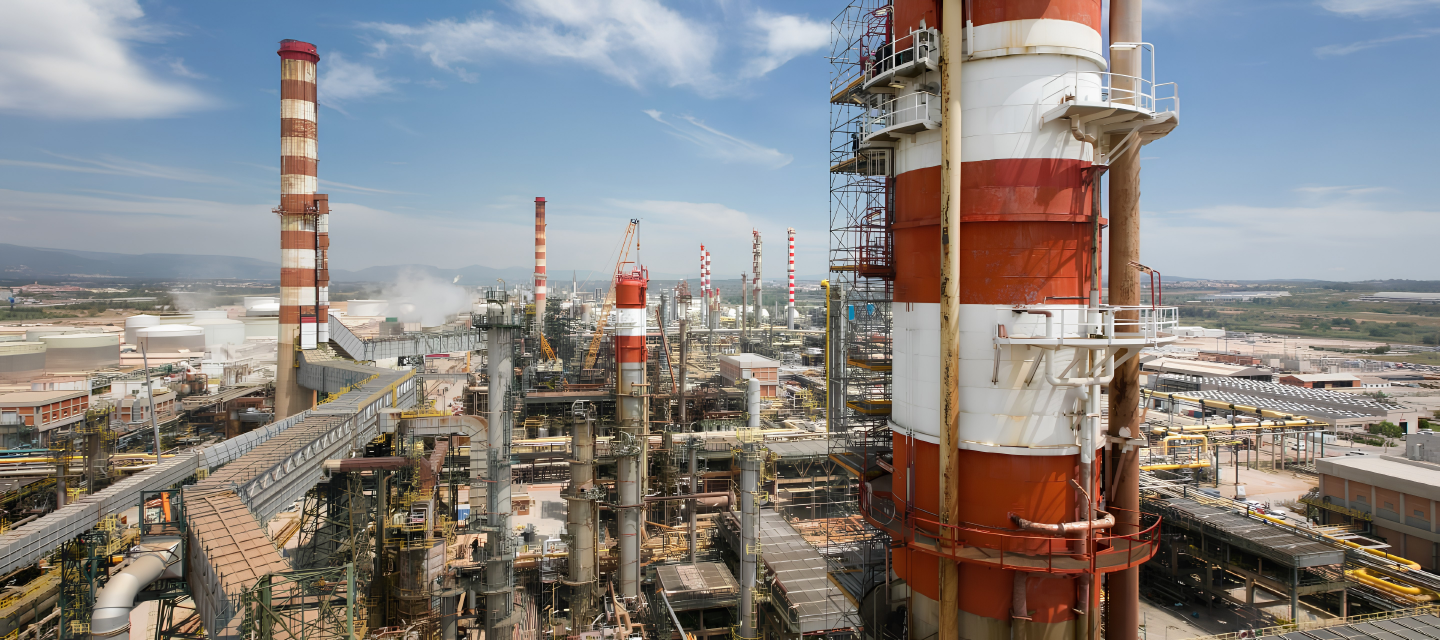
Tarragona is a good example of what we now call an industrial ecosystem. It is not an exceptional case, but it is one of the most established examples in Europe. Its strength lies not only in hosting one of the main petrochemical complexes in southern Europe. It also stems from the coexistence of large and small companies, universities, technology centres, logistics infrastructure, public administrations, suppliers and professionals who, over decades, have built a shared culture. The whole is far more than the sum of the individual companies: it is a territorial ecosystem. One that, moreover, shares future challenges such as the transition to circular models, low-carbon hydrogen, water management and industrial symbiosis.
And this is precisely what ECRN represents: not so much companies or national governments, but Europe’s chemical regions, which share very similar challenges. Chemistry needs ecosystems, ecosystems need territory, territories need Europe. It is a very natural progression.
It is precisely from this territorial perspective that I have had the opportunity to take part in this European process, as a member of the European Chemical Regions Network (ECRN). The experience has shown me that European competitiveness is built not only in Brussels or in the capitals of the Member States, but also in the regions that concentrate knowledge, industrial capabilities and talent.
Ecosystems are local, value chains are European and markets are global. Chemistry is local in its roots, European in its alliances and global in its markets.
From ideas to action
Industrial plants, research centres and talent always have a specific location. Innovation is born in a territory, but no ecosystem is self-sufficient. Its strength depends on its ability to connect with other European ecosystems, sharing knowledge, technologies and opportunities.
After many years working between industry, innovation and European forums, I have learned that Europe is particularly good at producing excellent diagnoses. The challenge now is to turn them into decisions, investments and policies sustained over time.
Industrial policies do not manufacture a single molecule. People and companies do. Policies only create, or hinder, the conditions that make it possible.
Thinking about the chemistry of the future is not about predicting the next revolutionary molecules. Above all, it is about building the conditions for Europe to remain capable of discovering them, manufacturing them and turning them into well-being for society.
This is probably the most valuable lesson I take away from this experience.
When I said that good chemistry and commitment never retire, I was thinking mainly of people. Today I would add another thought: chemistry does not retire either. It evolves, transforms and takes on new challenges. Continuing to contribute, even from a different role, is a way of giving back to the profession part of what it has given us over the years, and also a way of continuing to think about the chemistry of the future.
This article is an unofficial English translation of “Ensar la química del futur: construint consens per a la química que Europa necessitarà” by Ma. Dolors Núñez, originally published in Catalan in NPQ no. 514 (third quarter 2026), pp. 6–7, by the Col·legi de Químics de Catalunya. The original is available at quimics.cat/npq514-2026. The translation is provided for information purposes only. In case of any discrepancy, the Catalan original prevails. All rights remain with the author and the original publisher.