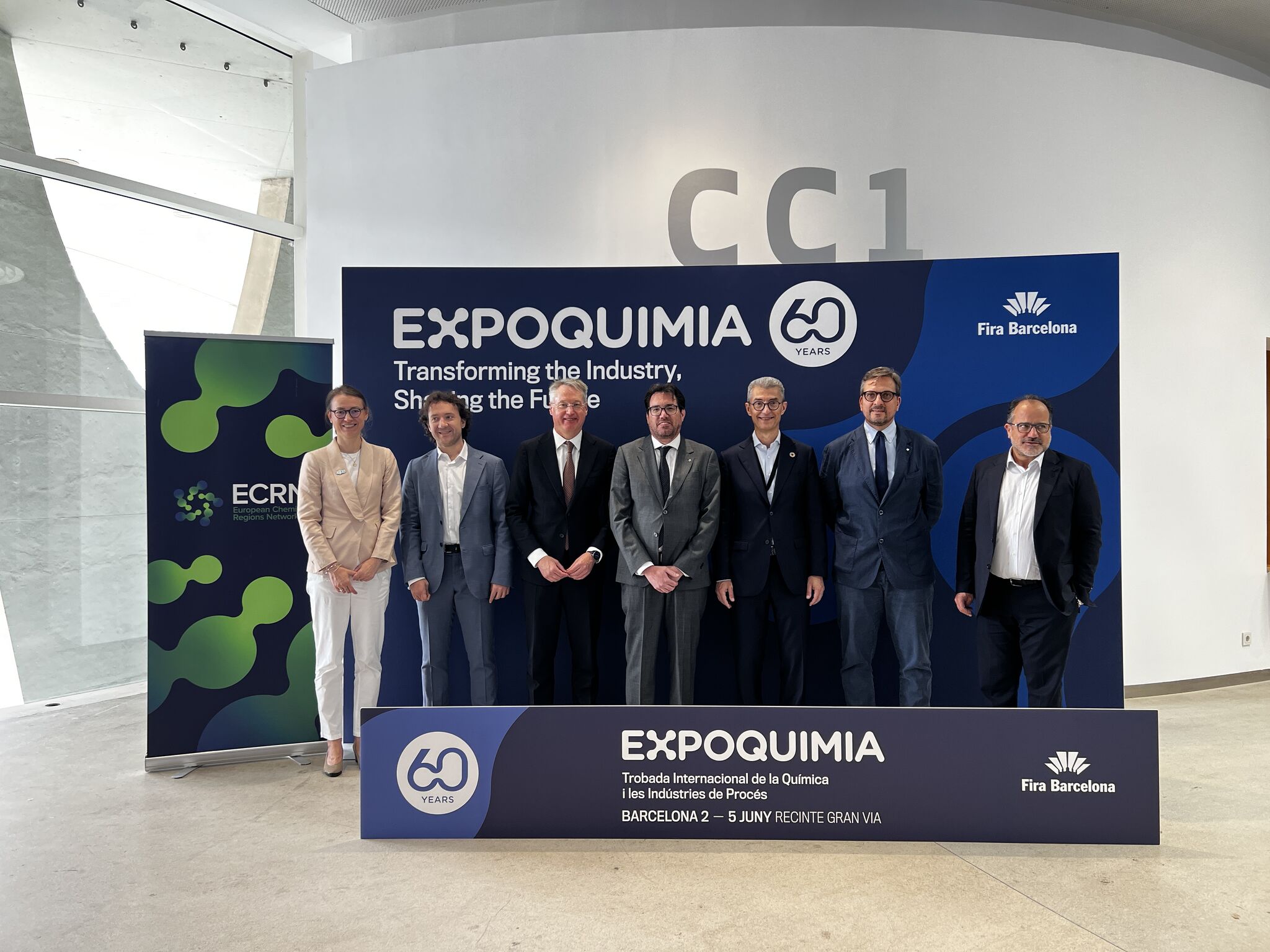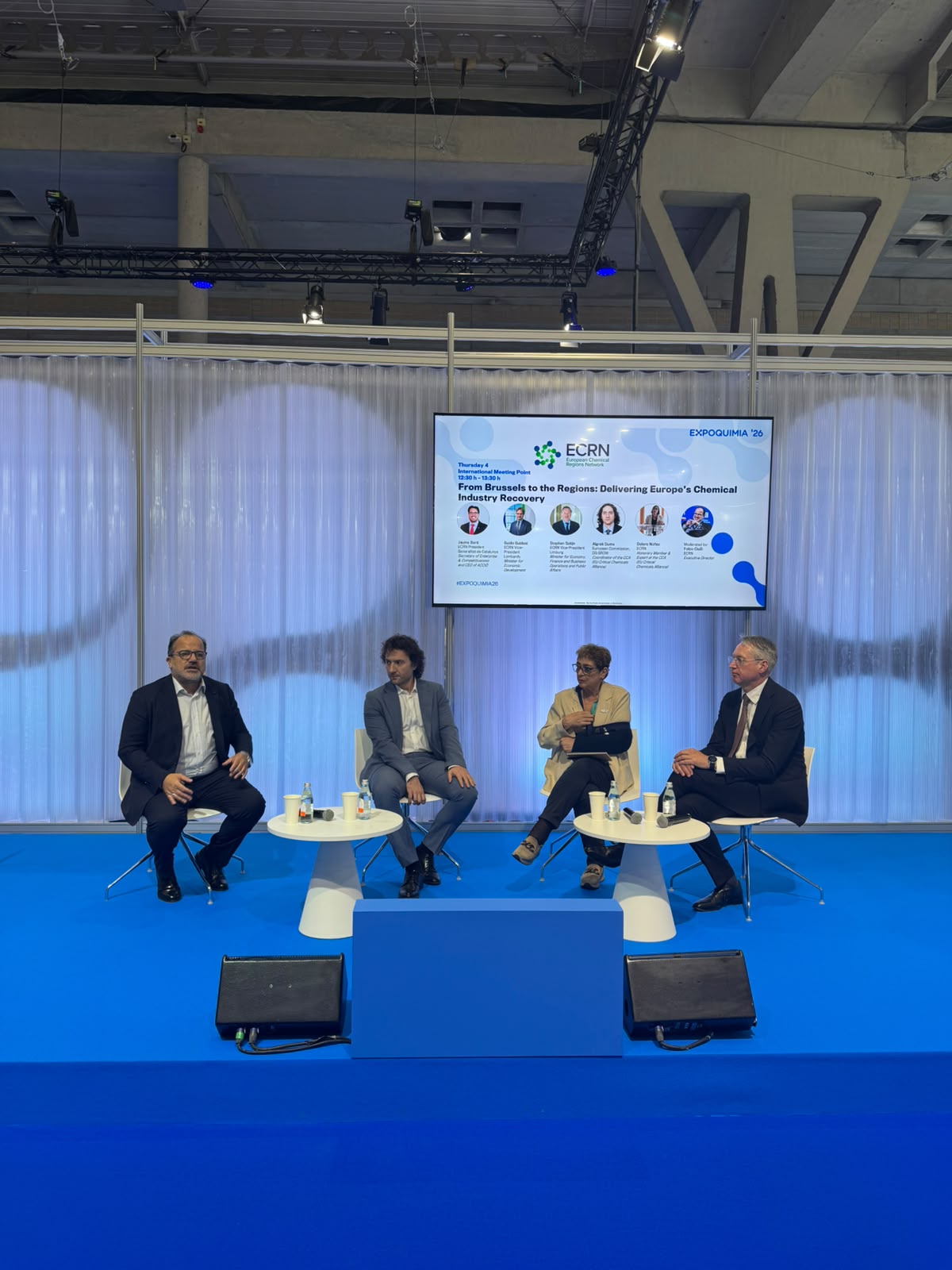
Barcelona, 4 June 2026 – The European Chemical Regions Network, in cooperation with ACCIÓ, and within the framework of Expoquimia 2026, organised the high-level debate “From Brussels to the Regions: Delivering Europe’s Chemical Industry Recovery”, bringing together representatives of the European Commission, regional governments and industry to discuss the future competitiveness of Europe’s chemical sector.
Earlier in the day, the ECRN Executive Board convened at Expoquimia’s premises to discuss the network’s strategic priorities and future activities. The meeting also marked the presentation of ECRN’s new visual identity, reflecting the network’s renewed commitment to representing Europe’s chemical regions with a modern and forward-looking image.
The afternoon conference, held at the International Meeting Point of Expoquimia, focused on the key challenges and opportunities facing Europe’s chemical industry at a time of profound industrial transformation. Discussions highlighted the importance of maintaining a strong industrial base in Europe as a prerequisite for strategic autonomy, economic security, innovation and sustainability.
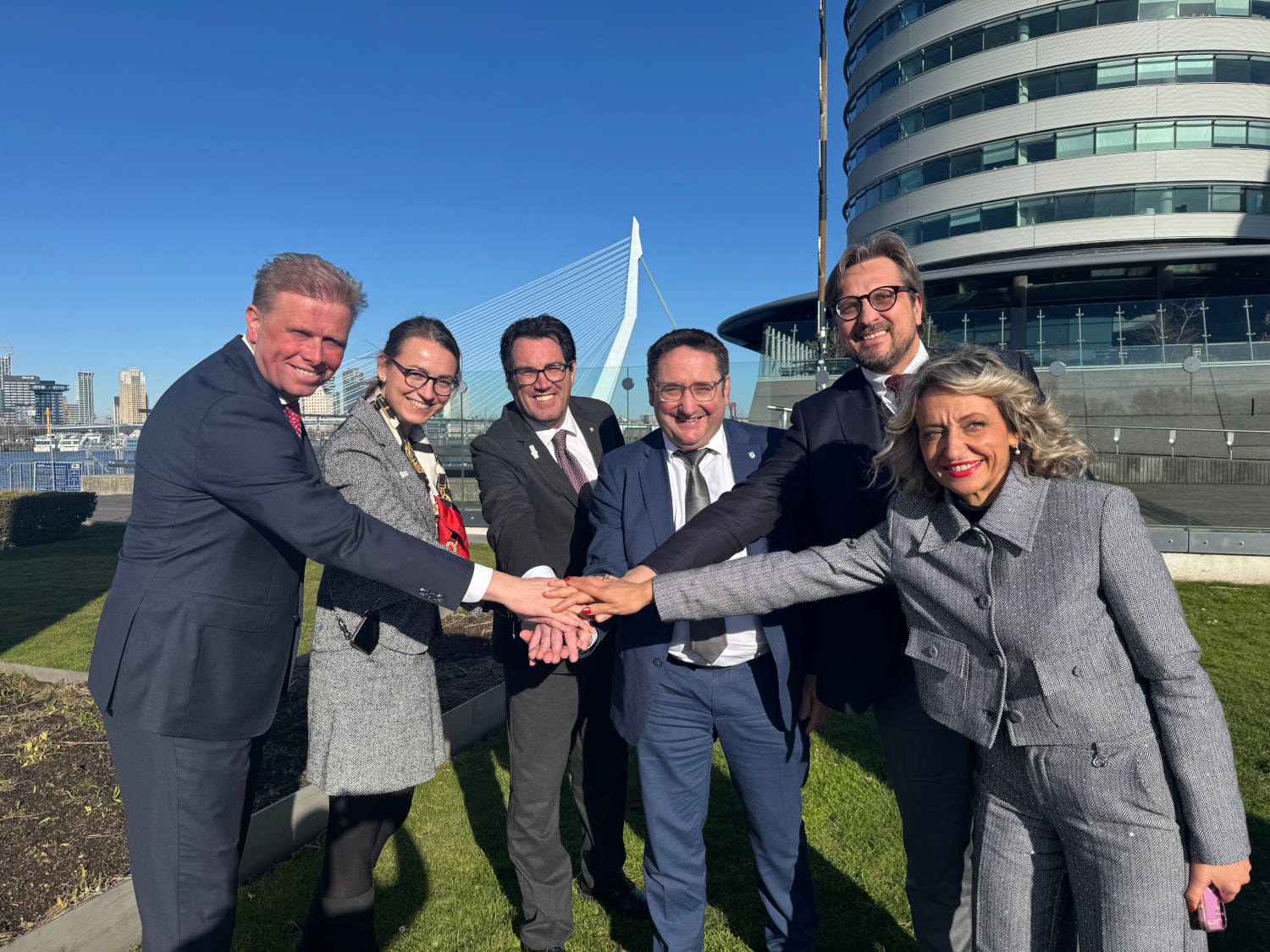
The debate featured contributions from Jaume Baró Torres, Secretary of Enterprise and Competitiveness of the Generalitat de Catalunya – ACCIÓ and President of ECRN for 2026–2027; Guido Guidesi, Vice-President of ECRN and Minister for Economic Development of Regione Lombardia; Stephan Satijn, Vice-President of ECRN and Minister of Economy and Finance of Provincie Limburg; Algreit D., Policy Officer at the European Commission’s DG GROW; and Maria Dolors Nuñez, Honorary Member and Independent Expert of ECRN. The discussion was moderated by Folco Ciulli, Executive Director of ECRN.
Participants examined the implementation of the recently adopted European Chemicals Industry Action Plan, the ongoing work of the Critical Chemicals Alliance, and the role of regions in supporting industrial resilience, investment and innovation. Speakers underlined that Europe’s chemical industry remains essential for countless industrial value chains and for the continent’s economic and strategic resilience.
A central theme emerging from the debate was the growing importance of implementation. While significant progress has been made in identifying critical molecules, strategic production capacities and investment needs, speakers stressed that success will depend on translating European ambitions into concrete action on the ground.
Regional authorities were recognised as key actors in this process. Industrial transformation does not happen in policy documents; it happens in industrial ecosystems, production sites and innovation clusters across Europe. Regions are where infrastructure is developed, skills are built, permits are granted and investments become reality. Ensuring that Europe remains an attractive location for critical chemical production will require close cooperation between European institutions, Member States, regions and industry.
The event concluded with remarks from Carles Navarro Vigo, President of the Expoquimia Organising Committee at Fira de Barcelona, who conveyed the greetings of the host organisation and thanked participants for contributing to such a timely discussion. In his closing address, Navarro stressed that Europe already has a clear understanding of the challenges facing its chemical industry and that the focus must now shift from analysis to implementation. He called for decisive action at European level to strengthen industrial competitiveness, foster innovation and create the conditions necessary for long-term investment across the sector.
ECRN would like to express its sincere gratitude to Expoquimia and ACCIÓ for the invitation to participate in this important event and for the excellent organisation.