The European Chemical Regions Network (ECRN), as a Supporting Partner of the European Chemical Industry Forum 2025 (ECIF 2025), played an active role in shaping the strategic discussions on the future of Europe’s chemical industry, with a strong emphasis on the regional dimension of industrial competitiveness, resilience, and security.
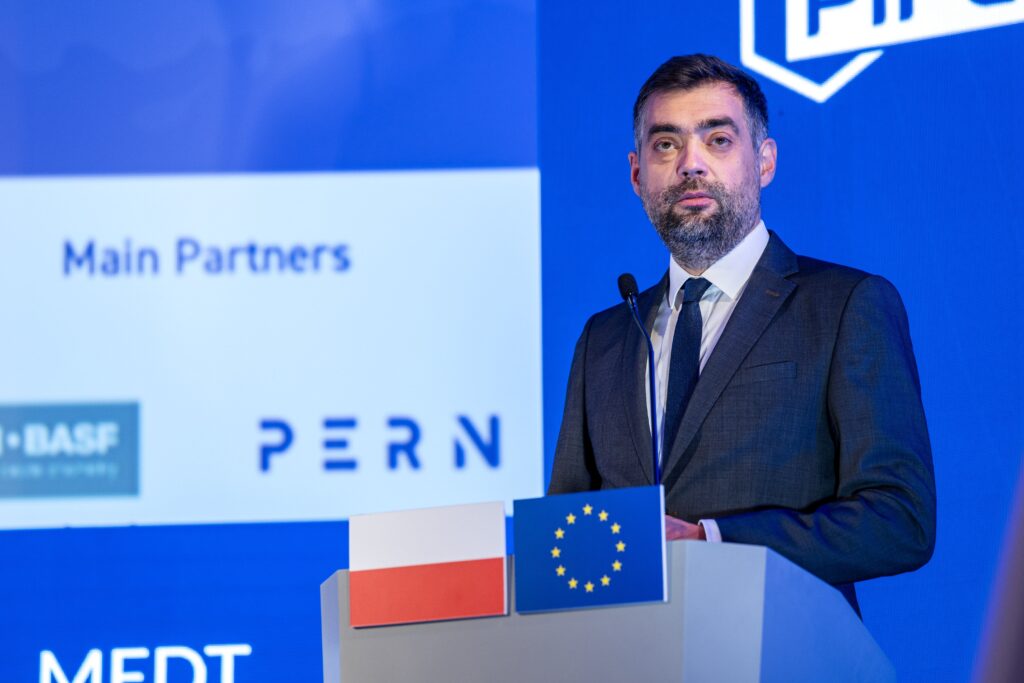
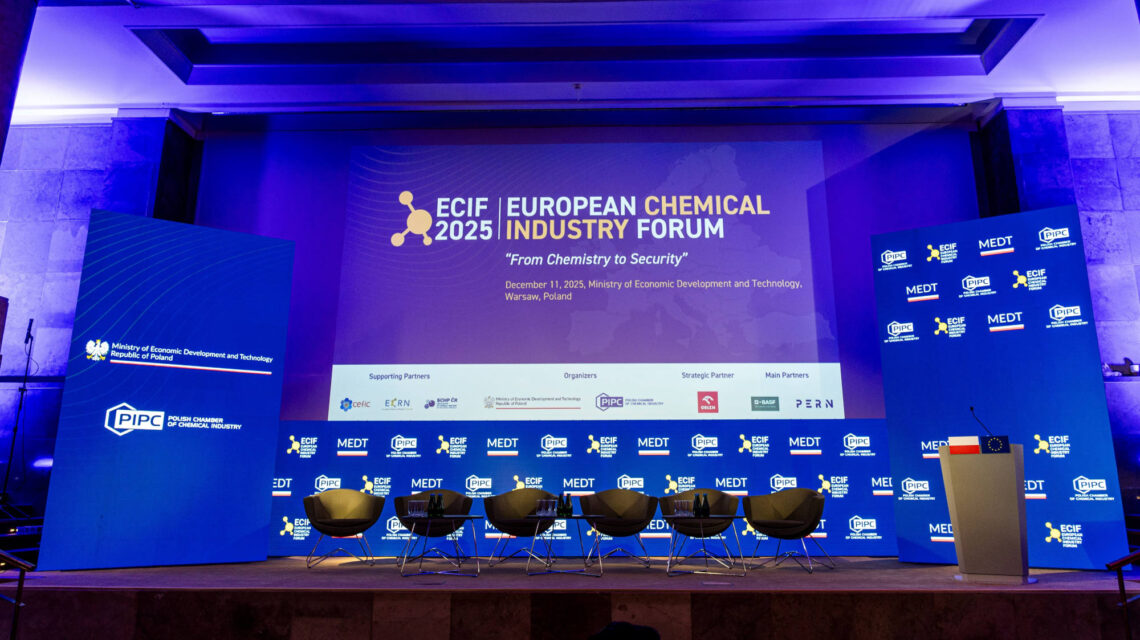
ECIF 2025 was jointly organised by the Polish Chamber of Chemical Industry (PIPC) and the Ministry of Development and Technology of Poland and took place on 11 December 2025 in Warsaw. The Forum brought together European institutions, national and regional authorities, and industry leaders to address the growing pressures faced by the chemical sector in a rapidly changing geopolitical, regulatory, and economic context. The event saw the participation also of Andrzej Domański, Minister of Finance and Economy of Poland.
ECRN’s contribution to the strategic debate
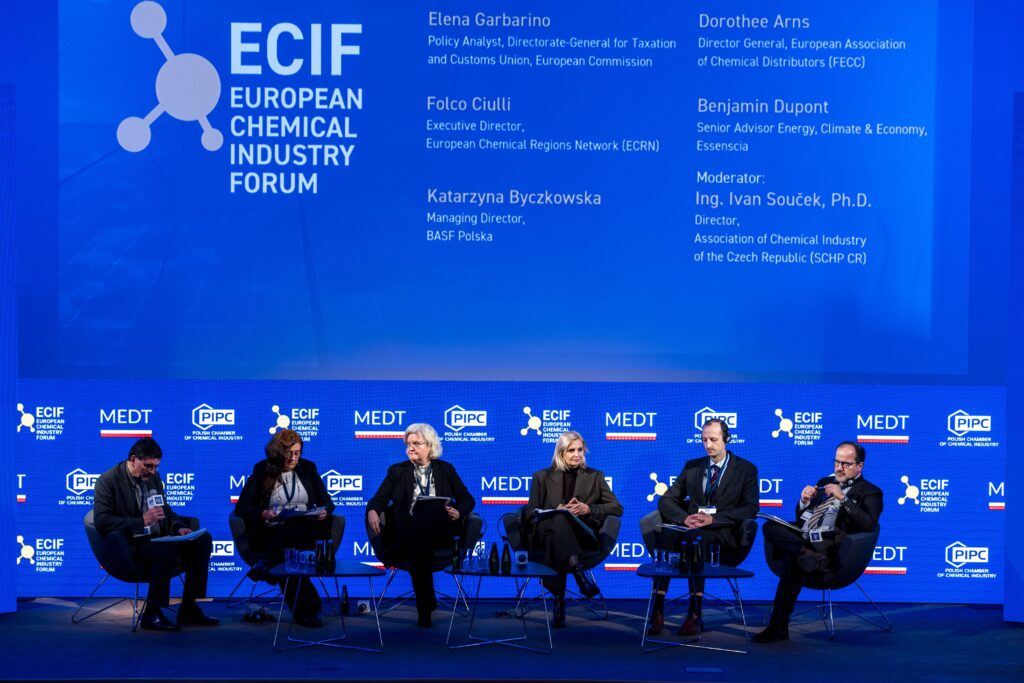
ECRN was prominently represented throughout the Forum, underlining the key role of regions in industrial policy design and implementation. ECRN representatives actively contributed to all three high-level debates, ensuring that regional perspectives were fully integrated into discussions on security, competitiveness, regulation, and the industrial and energy transition.
In Debate 1 – “Chemistry under pressure: security, resilience, competitiveness”, Arne Weverling, Regional Minister of Zuid-Holland and ECRN Board Member, highlighted the need for a stronger and more coherent European industrial framework. He stressed that climate objectives must be pursued alongside industrial competitiveness, and that regions must be structurally involved in policymaking. His intervention emphasised the importance of a strong internal market, resilient value chains, and the rapid development of European Chemicals Corridors to protect strategic sectors from deindustrialisation .
Regulation, competitiveness, and the regional dimension
ECRN’s role was particularly visible in Debate 2 – “Regulations vs. chemical industry”, which was introduced by Guido Guidesi, President of ECRN and Regional Minister for Economic Development of Lombardia, and moderated by Folco Ciulli, Executive Director of ECRN.
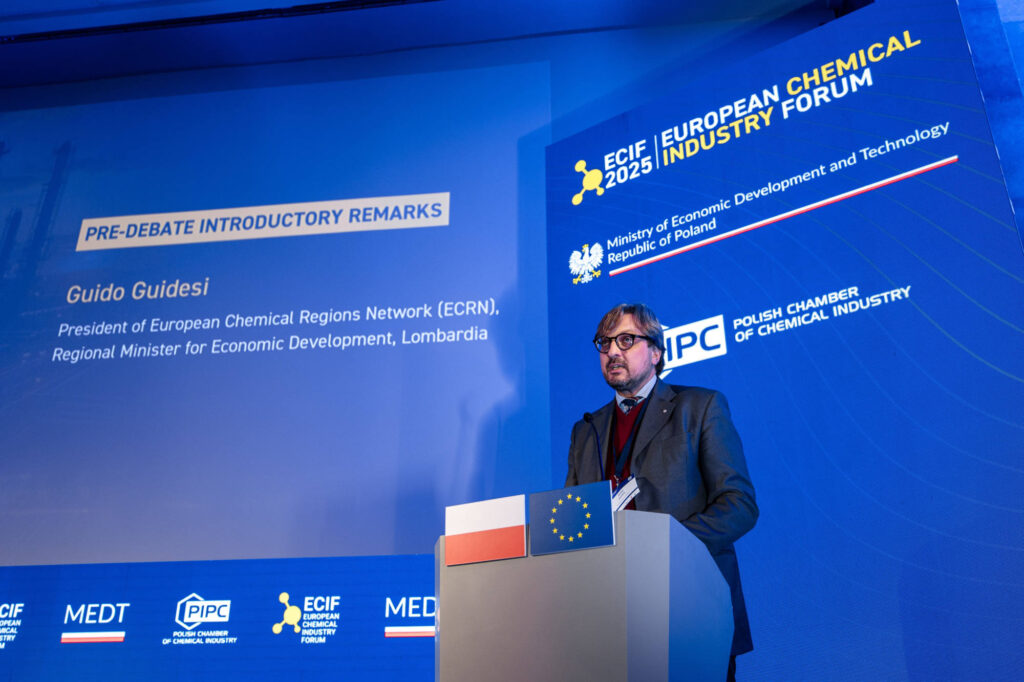
In his introductory remarks, Guido Guidesi underlined that regions are not peripheral actors, but the places where Europe’s industrial transition effectively takes shape. From the perspective of ECRN’s chemical regions, he noted that recent EU initiatives—such as the Clean Industrial Deal, the European Chemicals Industry Action Plan and the Chemical Omnibus—represent important steps forward, but are not yet sufficient to secure long-term competitiveness, resilience and technological sovereignty. He warned that, without a more coherent and ambitious industrial policy, Europe risks increasing its dependence on imports of essential chemicals, undermining both the green and digital transitions .
Guidesi also stressed the need for regulatory frameworks that are clear, stable and technologically neutral, capable of encouraging innovation rather than constraining it. He welcomed efforts to simplify REACH and reduce regulatory burden, while calling for a targeted and proportionate approach to sensitive dossiers, including PFAS, that recognises the strategic importance of maintaining production capacity in Europe. He further highlighted the central role of affordable and stable energy, modern infrastructure, and effective carbon leakage protection in enabling industrial decarbonisation without eroding competitiveness.
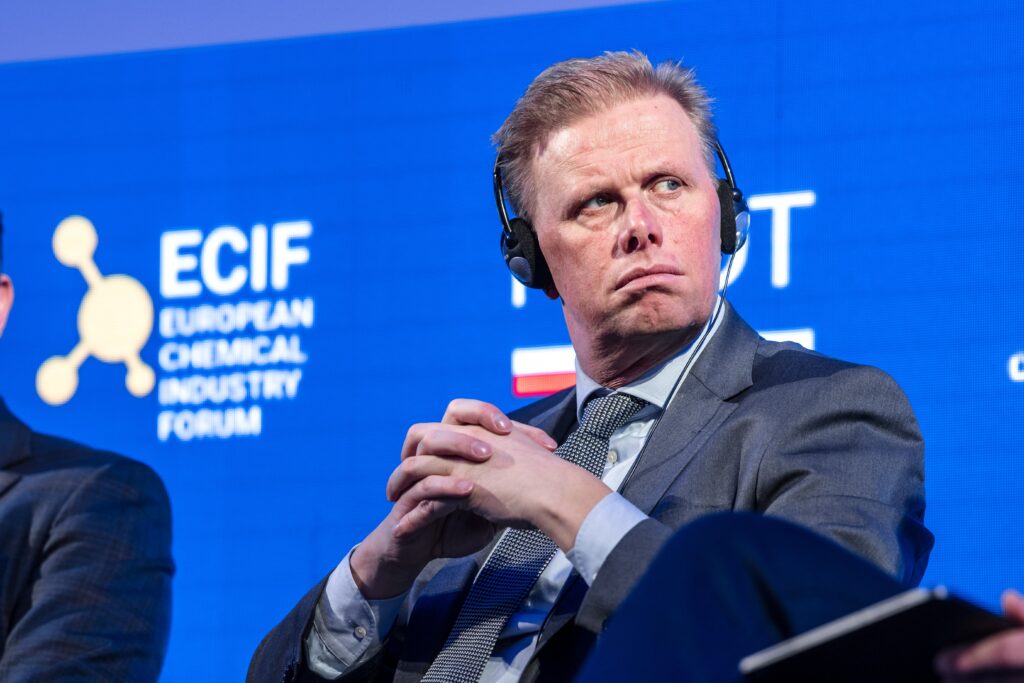
During the same debate, Tobias Gotthardt, State Secretary at the Bavarian Ministry of Economic Affairs, Regional Development and Energy and ECRN member, reinforced these messages by stressing that regional competitiveness is decisive for keeping industry in Europe. He called for a clearer industrial agenda, faster decision-making, and a decisive reduction of bureaucratic burdens, warning that Europe risks falling further behind global competitors if action is not accelerated.
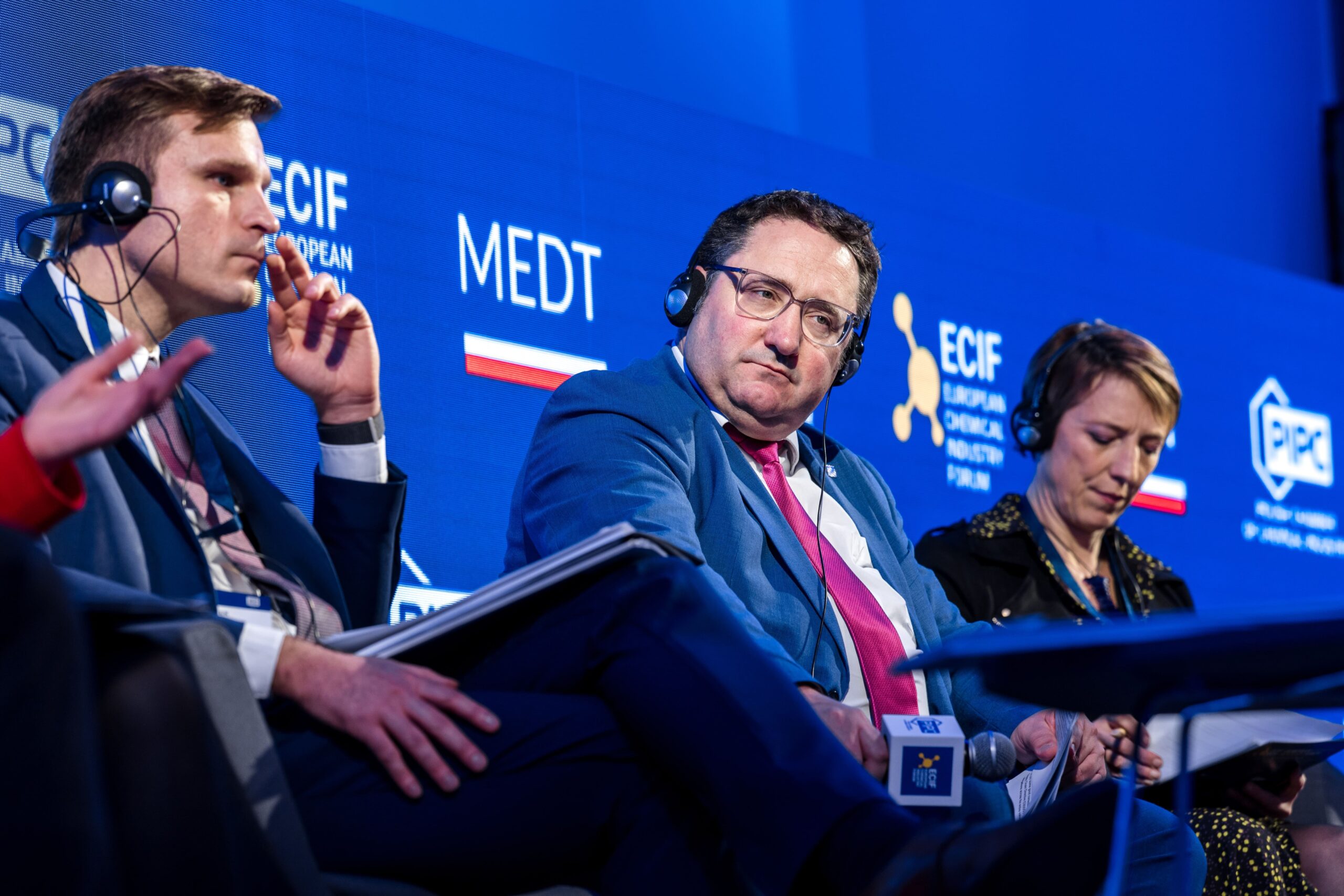
More broadly, the debate confirmed that policy implementation largely takes place at regional level, making regions essential actors in translating EU objectives into concrete industrial outcomes. Participants called for a more pragmatic EU industrial policy, focused on speed, predictability and effective support instruments for strategic sectors .
Industrial and energy transition: ECRN’s perspective
In Debate 3 – “Industrial and energy transition: the EU’s goals vs. the real possibilities of the industry”, Folco Ciulli presented ECRN’s work and its potential role within the framework of the Critical Chemicals Alliance (CCA). He recalled that recent crises have shown the EU’s capacity to act quickly when political will is aligned, and argued that the same urgency is now required to safeguard the chemical industry.

ECRN highlighted the need to reconcile decarbonisation objectives with competitive energy prices, secure access to raw materials, and resilient infrastructure. The discussion reaffirmed ECRN’s position that regions are central to delivering the industrial and energy transition, as they host chemical clusters, manage infrastructure and deploy key support instruments .
Acknowledgements
ECRN would like to thank the Polish Chamber of Chemical Industry (PIPC) and its President, Tomasz Zieliński, for their leadership and commitment in organising the European Chemical Industry Forum 2025, as well as for the close and effective cooperation that made this first edition a valuable platform for high-level exchange between industry and policymakers.